close


Jonathan Lopez


My Projects

BeWell: Walk, Breathe, Reflect
Mindfulness app to help hospital workers alleviate burnout.

BeWell: Walk, Breathe, Reflect
How might we use Barnsdall Art Park's unique location and strict regulations to help hospital workers in Los Feliz and East Hollywood alleviate burnout?

Problem
62% of hospital workers in the United States experience burnout. To help alleviate this, we aimed to create an opportunity for these individuals to step out of their demanding work environments and recharge. We selected Barnsdall Art Park, the only park in the area, as the space for this initiative. However, the park presents challenges: strict rules, limited space, and a lack of visibility, as it feels quite secluded. Instead of viewing these aspects as obstacles, we saw them as potential strengths for our target audience. The park’s privacy and unique regulations can be leveraged to create a serene and exclusive environment, offering hospital employees a truly relaxing experience.
Insights
29% of jobs in East Hollywood are medical field related. These jobs lead to mental and physical exhaustion referred to as burnout. Out of all those who visit hospital gardens, 95% stated they felt different after visiting. In addition, individual focused interventions like mindfulness, stress management, and small group discussions help alleviate symptoms of burnout.

Solution
BeWell is a mobile app designed to support hospital employees by using geofencing technology to guide them to East Hollywood's only park, Barnsdall Art Park. Positioned near three major hospitals, the app leverages the park’s tranquil environment to offer activities like meditation, breathing exercises, and journaling, all of which are proven to reduce burnout symptoms. To encourage engagement and exploration, BeWell incorporates gamification features such as badges and rewards. These incentives are inspired by the park’s art, with each badge highlighting unique aspects of the artists showcased in the on-site museum, fostering a connection between relaxation and creativity.
Forma
Tell your creative stories.
Forma
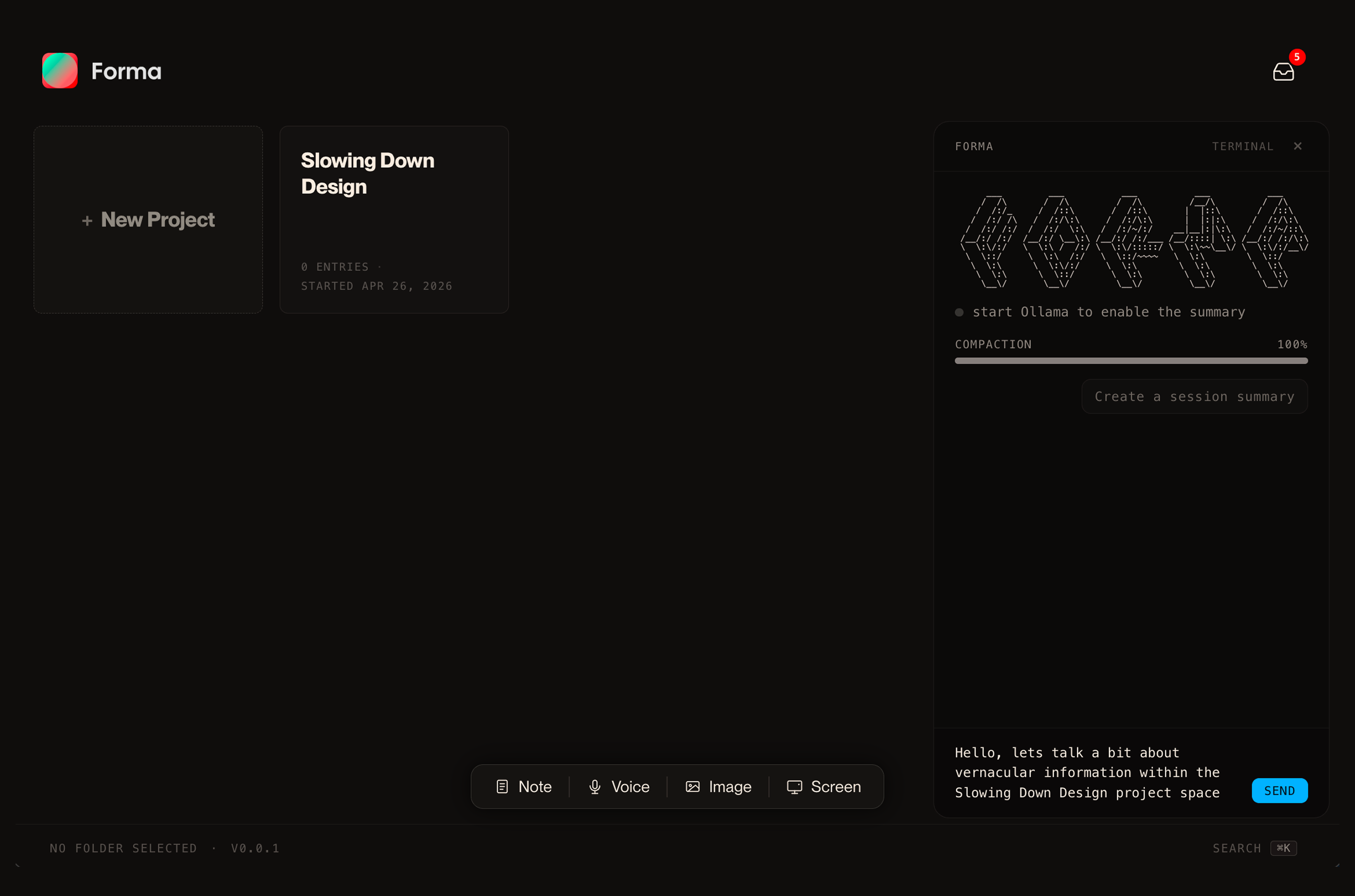
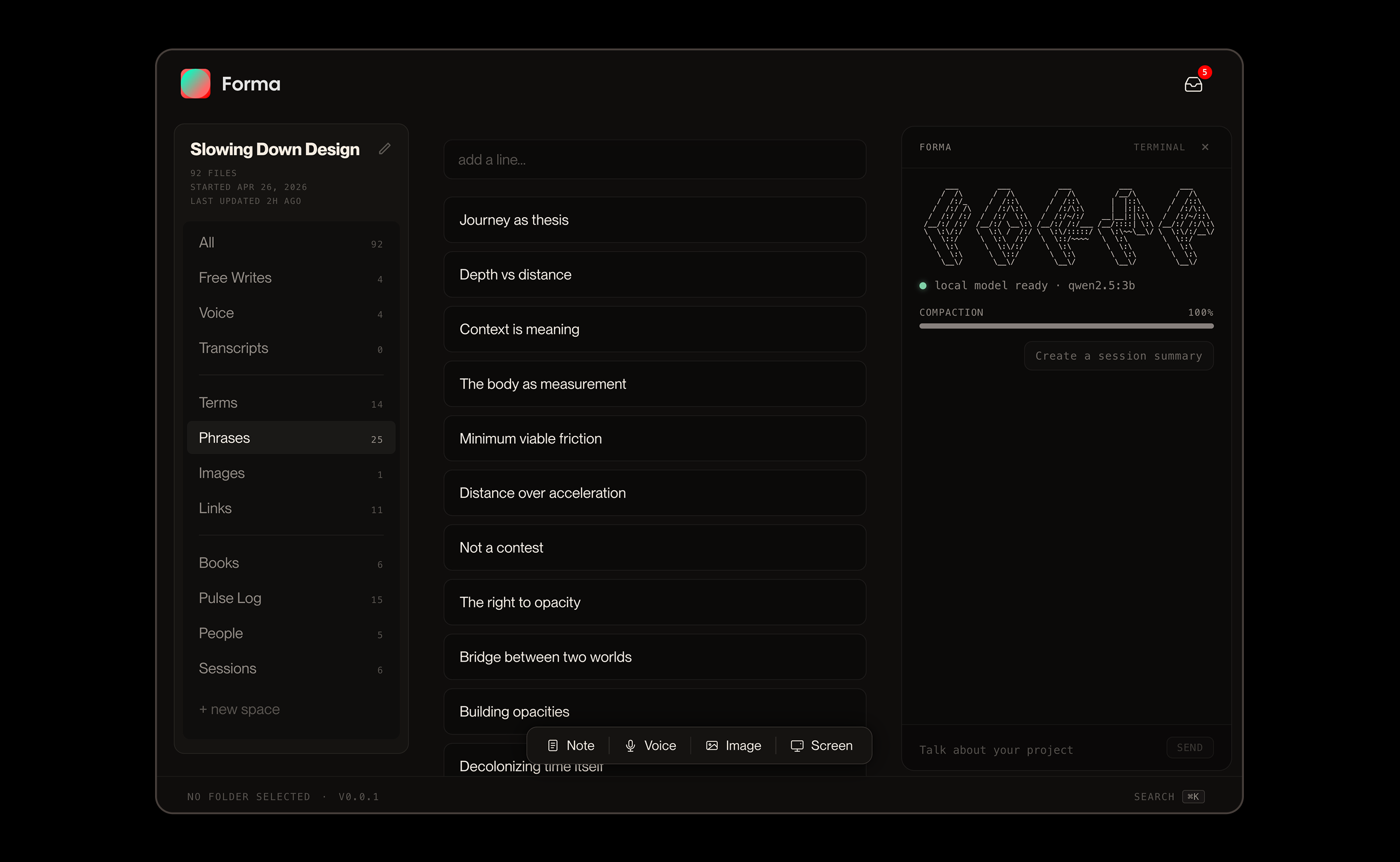
"Forma is a local-first, private tool for creative people who want to keep the process behind their work, not just the polished result. The tools we create with are built for speed, and in that speed they strip out context: the voice memos, photos, notes, and dead-ends that explain how something was actually made. Most software rewards the finished output and quietly discards everything underneath it. Forma is built to hold those layers instead. As you work, you capture as you go, and Forma files each layer as a plain file you own. A built-in, on-device AI lets you ask questions about your own process privately, with nothing sent to the cloud. That saved context is what lets you tell the real story of how the work was made. Forma is paired with Slowing Down Design, three Risograph posters designed in Los Angeles and printed in collaboration with Impresos Mexico in Mexico City. "
Problem
"Creative work is increasingly produced through tools optimized for speed and polished output. In prioritizing the finished result, these tools tend to discard the context that surrounds its making: the rough notes, the half-formed ideas, and the dead ends that never reach the final piece. What remains is the outcome, stripped of any record of the thinking that produced it. For creative practitioners, this represents a meaningful loss. Process is where learning accumulates, yet there is rarely a dedicated place to preserve it. Materials scatter across disconnected applications, notes are misplaced, and cloud-based storage often requires surrendering a private creative process to external servers. When the moment comes to articulate how a project developed or to apply to a program, those formative layers have usually disappeared. The central challenge, then, was to design a tool that treats process as seriously as outcome, that keeps a maker's work private and fully owned, and that makes the act of preserving context feel intuitive rather than burdensome. "
Insights
"Forma emerged through several connected stages, and each one reshaped the project. Observation came first. Watching how creative work is typically presented, I noticed that the process behind a finished piece almost never makes it into the room. That absence became the project's starting point, as it was living proof of a bigger issue with identity compression and frictionless tools. Secondary research into how digital tools handle information confirmed the pattern: most are built to compress and move output quickly, treating the surrounding context as disposable. Prototyping turned the idea into something testable. Building a working, local-first version of Forma taught me that friction, often treated as a flaw, is actually where meaning accumulates, so I designed for it rather than against it. A parallel material experiment, a Risograph poster series produced in collaboration with Impresos Mexico, tested the same principle in analog form: building an image one ink layer at a time keeps texture that a faster process would flatten. Finally, feedback from industry practitioners sharpened the direction. One reviewer noted that the most valuable thing to preserve is often the work that did not succeed, the dead-ends that might still matter later, which validated treating process as something worth keeping. "
Solution
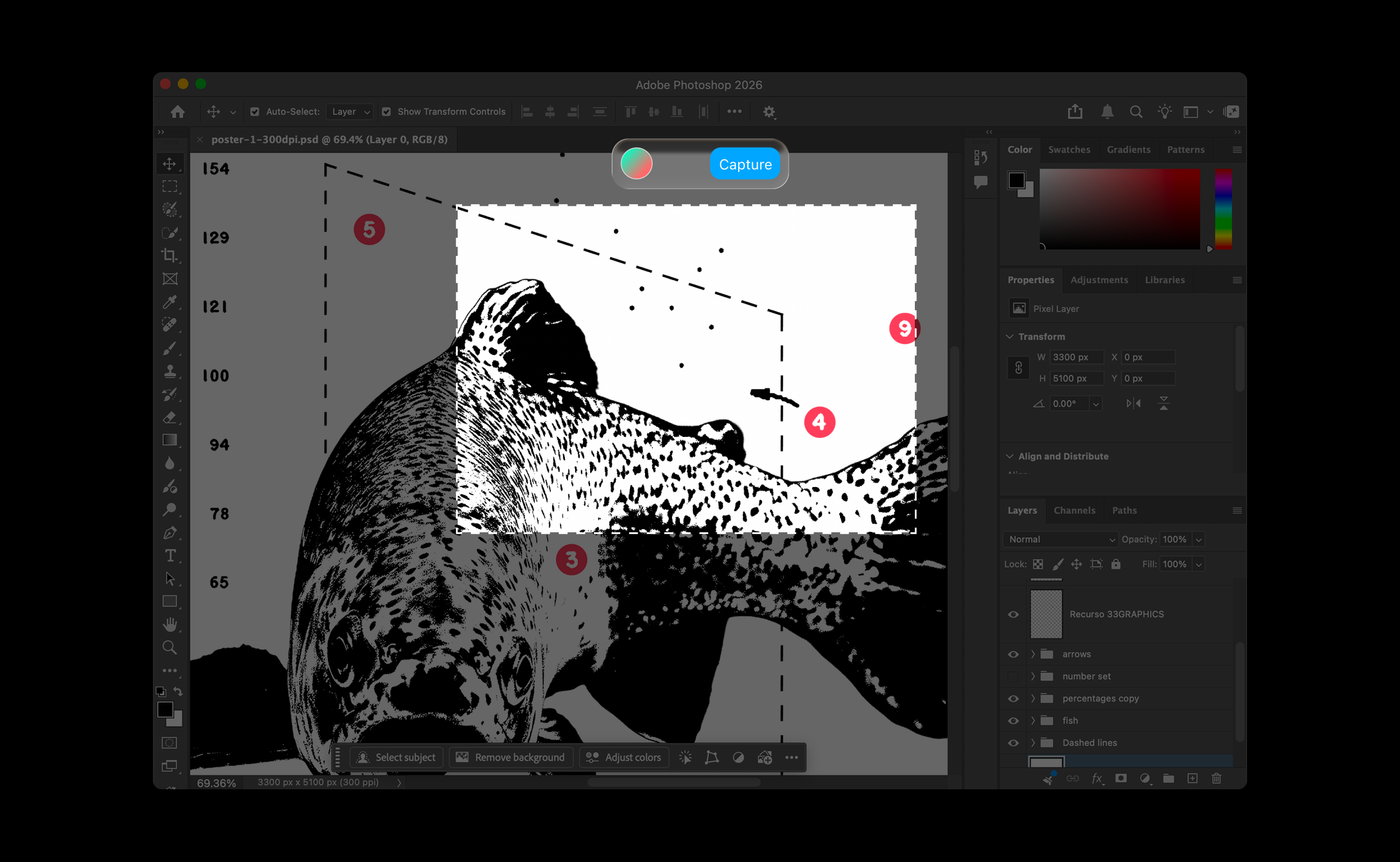
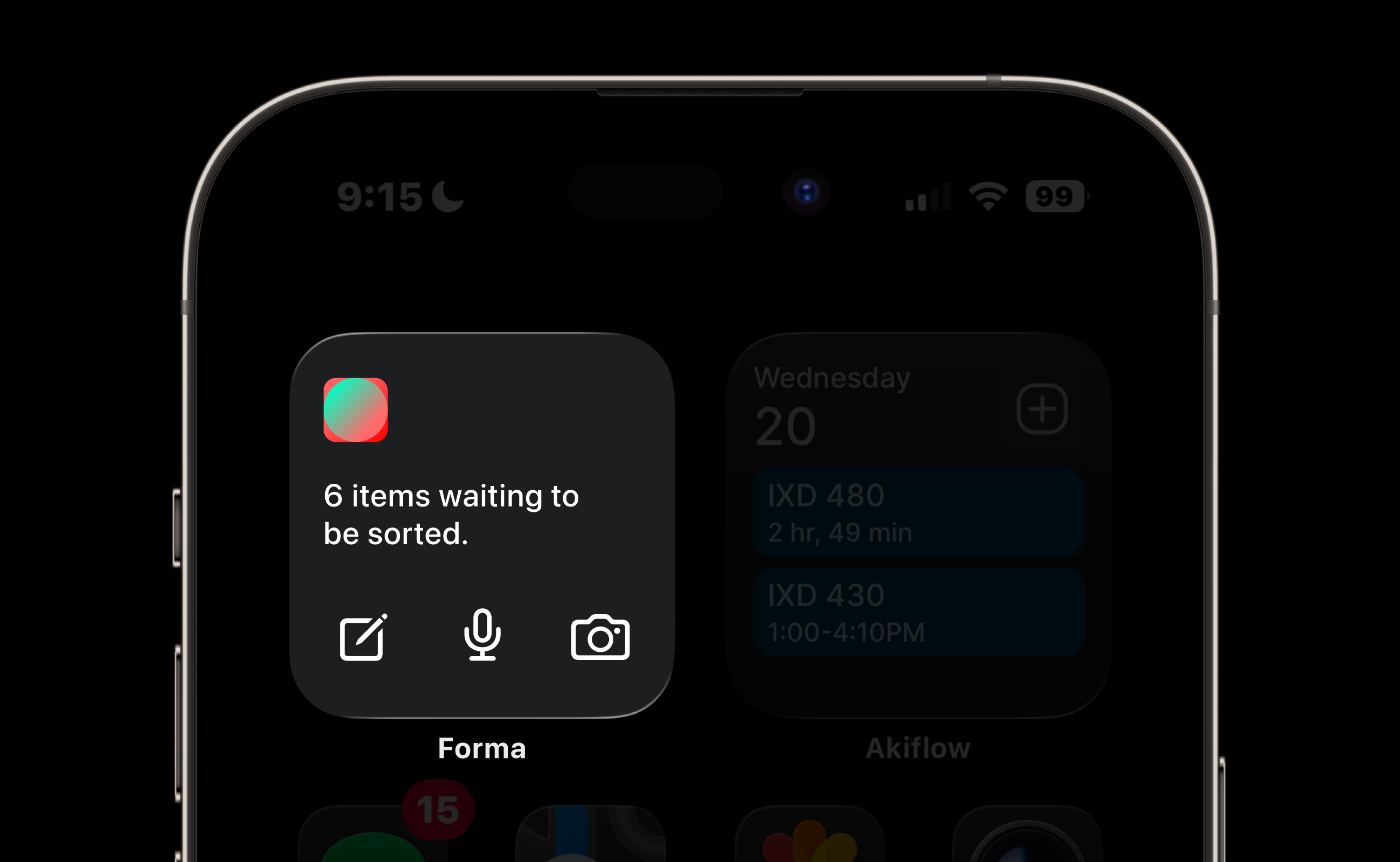
"The result is Forma, a working, local-first prototype that treats a creative process as something worth keeping. It rests on four principles: the maker owns everything, friction is a feature rather than a flaw, the tool should actively resist compressing the work, and a person's process stays private. In practice, you capture as you go, a note, a voice memo, an image, or a screen, and Forma files each one as a plain file stored directly on your own machine. A built-in transcription model and an on-device language model let you revisit and question your own process without anything leaving your computer. Rather than smoothing every step away, the interface asks you to place each piece deliberately, so the act of saving context becomes part of the thinking. Forma is accompanied by Slowing Down Design, a three-poster Risograph series produced with Impresos Mexico that demonstrates the same conviction in physical form. Together, the prototype and the printed work argue that design can preserve the texture of how something was made, rather than discarding it in the name of speed."
