close


Oliver Litner


My Projects

Mimi
The AI virtual assistant connecting Koreatown seniors

Mimi
Mimi supplants the first-come-first-serve chaos at the Koreatown Senior and Community Center, helping users gather information and queue for class registration without ever having to arrive in person.

Problem
All services at the Koreatown Senior and Community Center run on a first-come-first-serve system. Holding one's place in a physical line leads to exertion and strain, and mobility barriers such as these will only prevent seniors from finding community. The center has been looking to move class registration online, but have refrained, as seniors 'don't know how to use the computer, or don't want to.'
Insights
Currently, the only parameter allowing users to gather information at the center, and take action, is physical presence. We hypothesized that if seniors are able to perform these operations digitally, this will result in them having more intentional trips to the center — they'll find they wait in line for less time, and have a better sense of what to expect when they're traveling to the center. We also spoke to classmates who routinely field calls from family members asking for tech help. What happens when those assistants are not available? We hypothesized that an artificial intelligence Senior Center representative, Mimi, could act as that assistant in a scalable manner, causing more seniors to adopt this new protocol.


Solution
Mimi is a friend and an agent, conversing with users and helping with both tasks and discovery. With Mimi, users will make educated decisions about lunch pickup, and gain a friendly assistant for class scheduling. She'll help members create their profiles, discover programs they’d like to sign up for, and allow them to take action at the center without having to travel in person.
A.M.O.S.
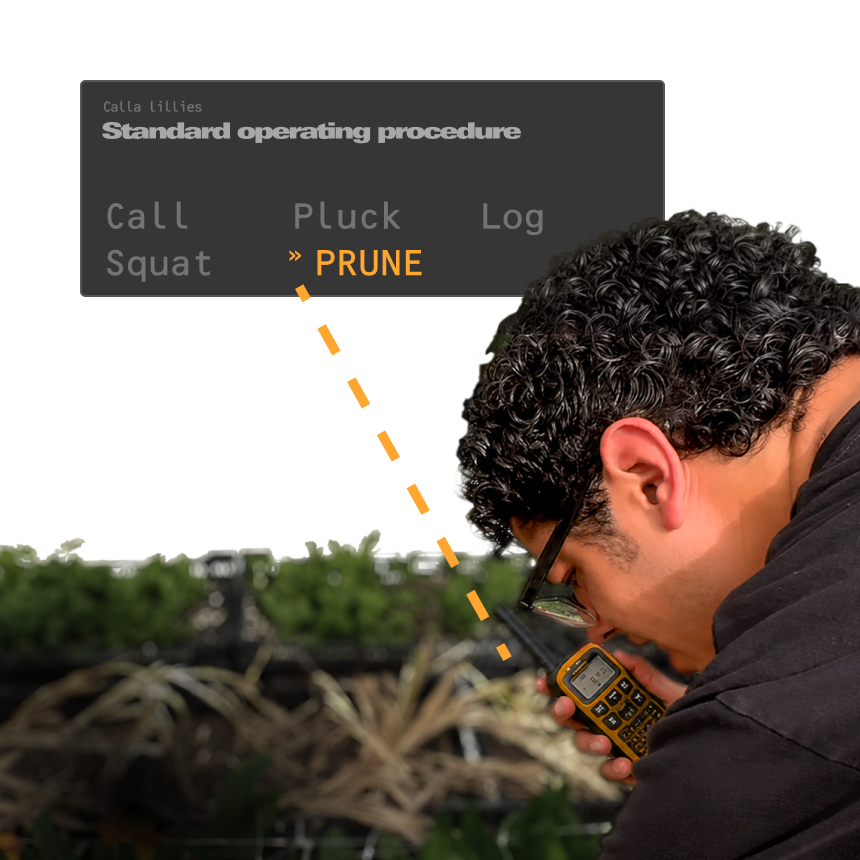
Mindfulness buddy on your lapel: ending manual labor re-work with $10 walkie talkies.
A.M.O.S.
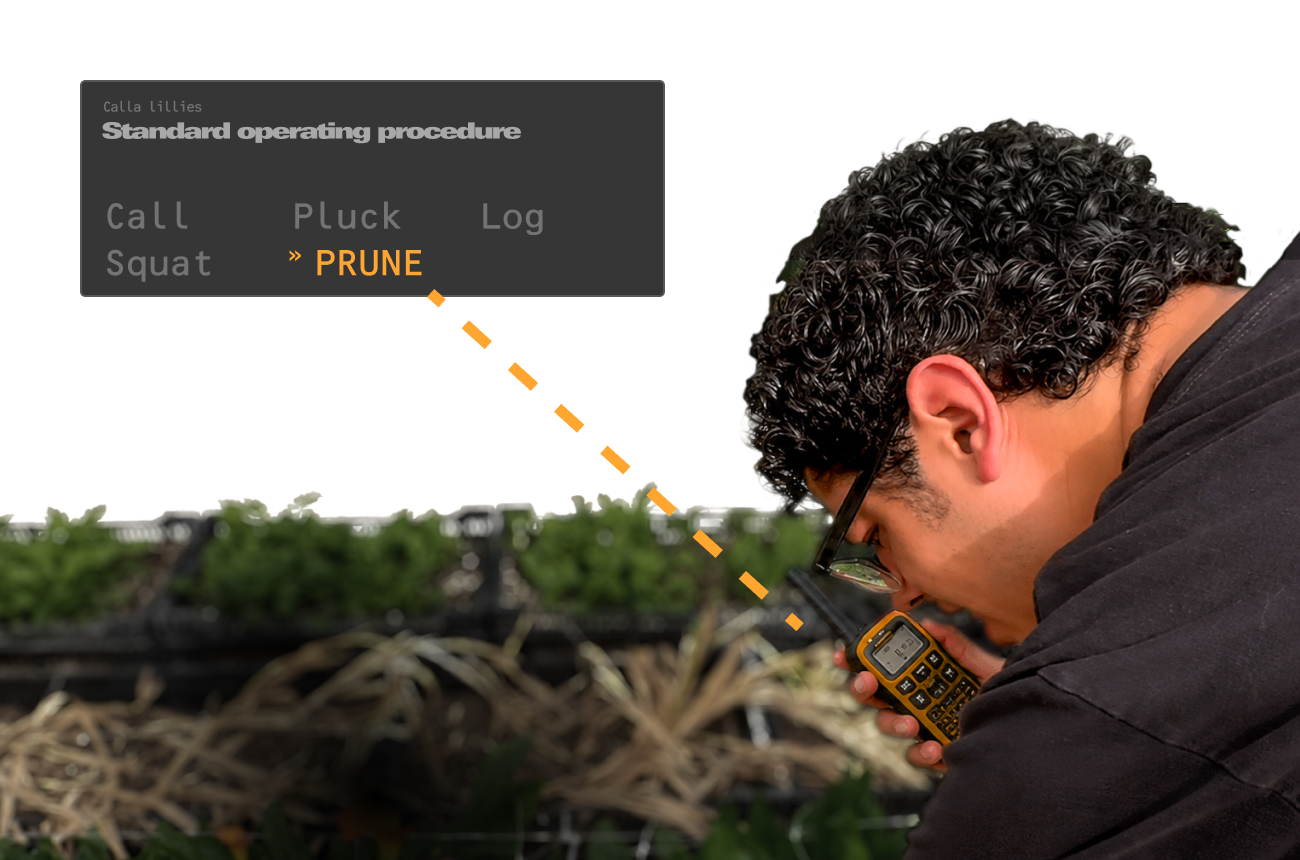
Have you ever shown up to a volunteer event, and like me, had no idea what you were doing — and worse, thought you were screwing things up? Meet AMOS, mindfulness buddy on your lapel. When you can’t talk to your supervisor or co-contributors, AMOS is your AI audio copilot. Talk to it through a family-grade walkie talkie, and it guides you, listens as you verbalize, and prompts you to pause. This is how we encourage quality assurance, DURING the work — not after. AMOS is an adaptation of lean manufacturing mainstays, for deskless teams. AMOS listens as you check your work against standard operating procedures, driving adherence for this error-reduction practice, in an audio modality that deskless workers can access while hands are occupied. As you cannot be your own quality assurance agent as you fatigue, AMOS sends jokes, icebreakers, and challenges over the radio — giving you a reason to switch from work to break mode for a 1-minute micro-break — and thus restoring your cognitive faculties for effective work. For the 100% of US major cities relying on park volunteer groups, AMOS transforms contributor effectiveness, with only store-bought equipment.
Problem
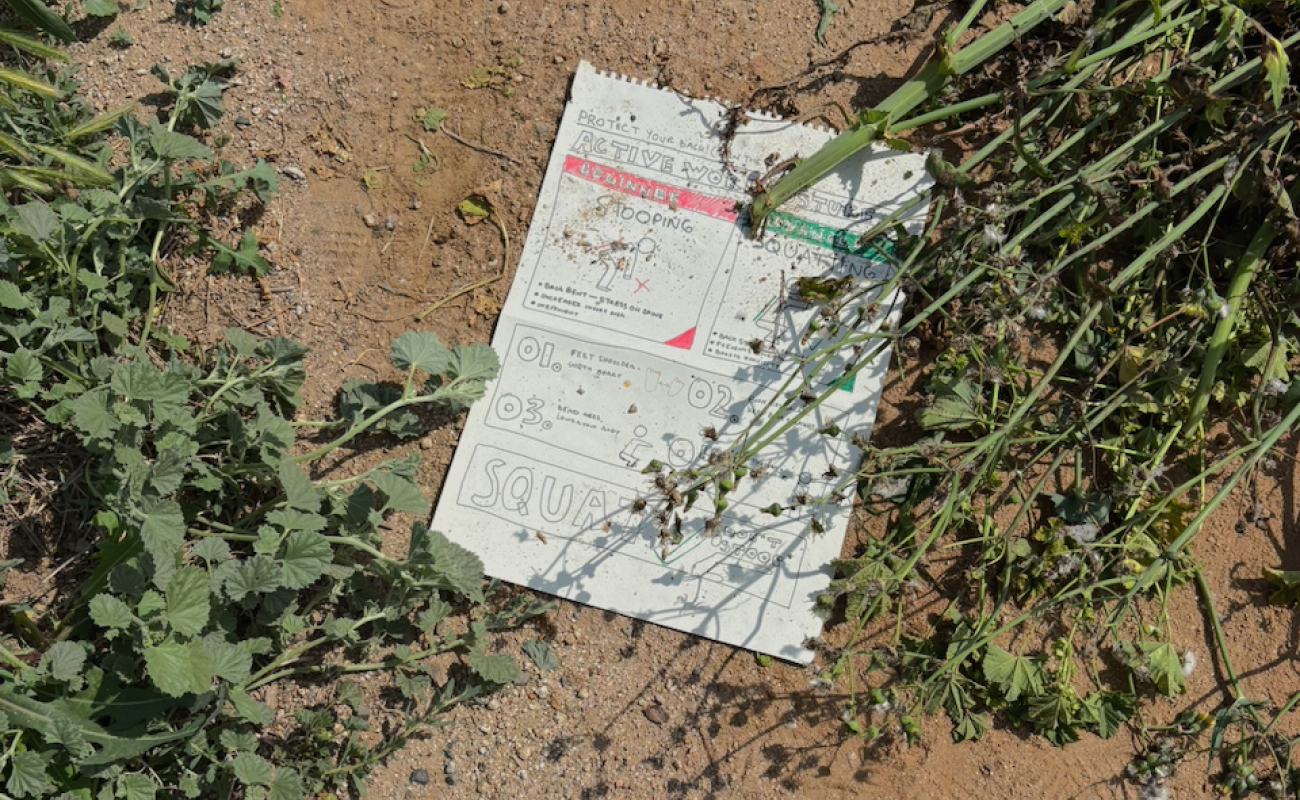
Imagine this. You're running the Native Garden Restoration Project in the park in the center of town. Volunteers are showing up from Eventbrite. You give them their gear, and you get them trained. 'Everybody knows what know how to plant?' Great. You go to your corner of the park, and you let them work. When you return, you find the native plants trampled, others waterlogged, and each seedling planted in a new, creative way, different each time, some with the plastic pot still on. You're going to have to redo almost everything, just like last week and the week before. And you're not alone. America spends $70 billion yearly, redoing jobs flubbed the first time because of human error. You bring roughly six volunteers together weekly. You've tried to train them, tried to supervise, tried a buddy system. Nothing seems to work, and you don't have the excess money that construction companies dip into, knowing that mistakes will occur. 80% of the workforce is deskless like your team, but the majority of the money for technological development goes to desk-workers. Additionally, 100% of US major cities rely on volunteer teams like yours, providing funding you can't waste — and other volunteer coordinators have quit earlier, over less. Training is your method of bonding with your volunteers, but synchronous training goes in one ear, out the other. You can hand out paper SOPs, so volunteers know what step they're on, what they've got to do, and what comes next — but this is deskless work: there's nowhere to mount a procedure in anyone's field of vision, and the SOPs end up on the ground. Japanese Railways has a protocol called shisa-kanko — point-and-call — which requires employees to point at and verbalize what they're doing as they do it. The pairing of physical and verbal action forces the brain to engage, and practitioners see error reductions approaching 85%. Volunteering, I learn how to put together a planter bed, and my job is to make sure a specific part goes on the bottom. I know this — and I lapse out of pointing-and-calling, and I make more mistakes. If we in the West are not comfortable verbalizing what we're doing as we do it, and can't keep it up, we are bound to revert to autopilot and make more errors. Lastly, nobody rests. Even the coordinators hyper-fixate, with a syndrome of one-more-thing-ism — there's always a new plant to prune, or another to dead-head. Working on a team, when one volunteer is moving faster, the others feel they must match their speed to keep up, and rests are frowned-upon. This fatigues workers quicker, using time-spent-working as a heuristic for being a good employee, when they'd be better resting and restoring cognitive faculties so they can prevent drifting into autopilot. Autopilot is where they spend the bulk of their time, and it's where they make the most mistakes. So, you're asking yourself a billion dollar question: how do you inspire quality assurance during the work?
Insights
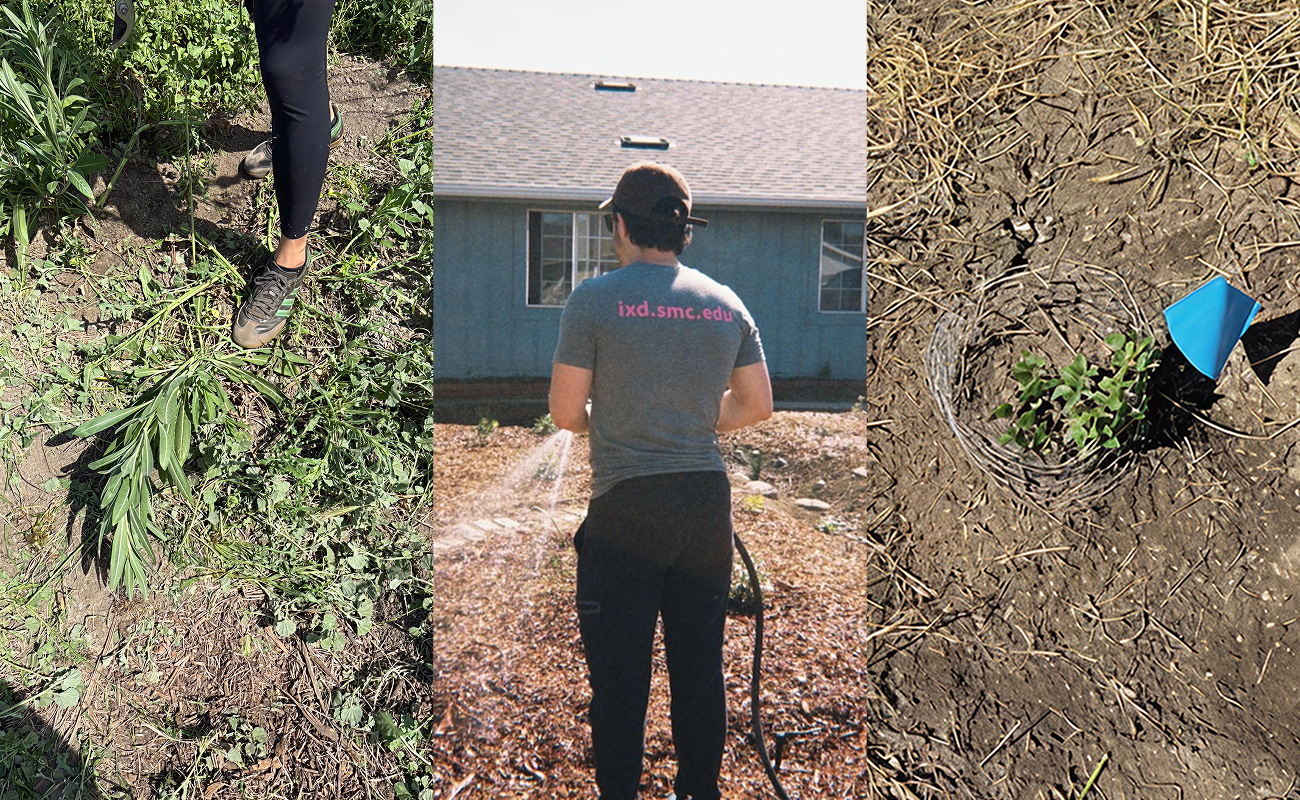
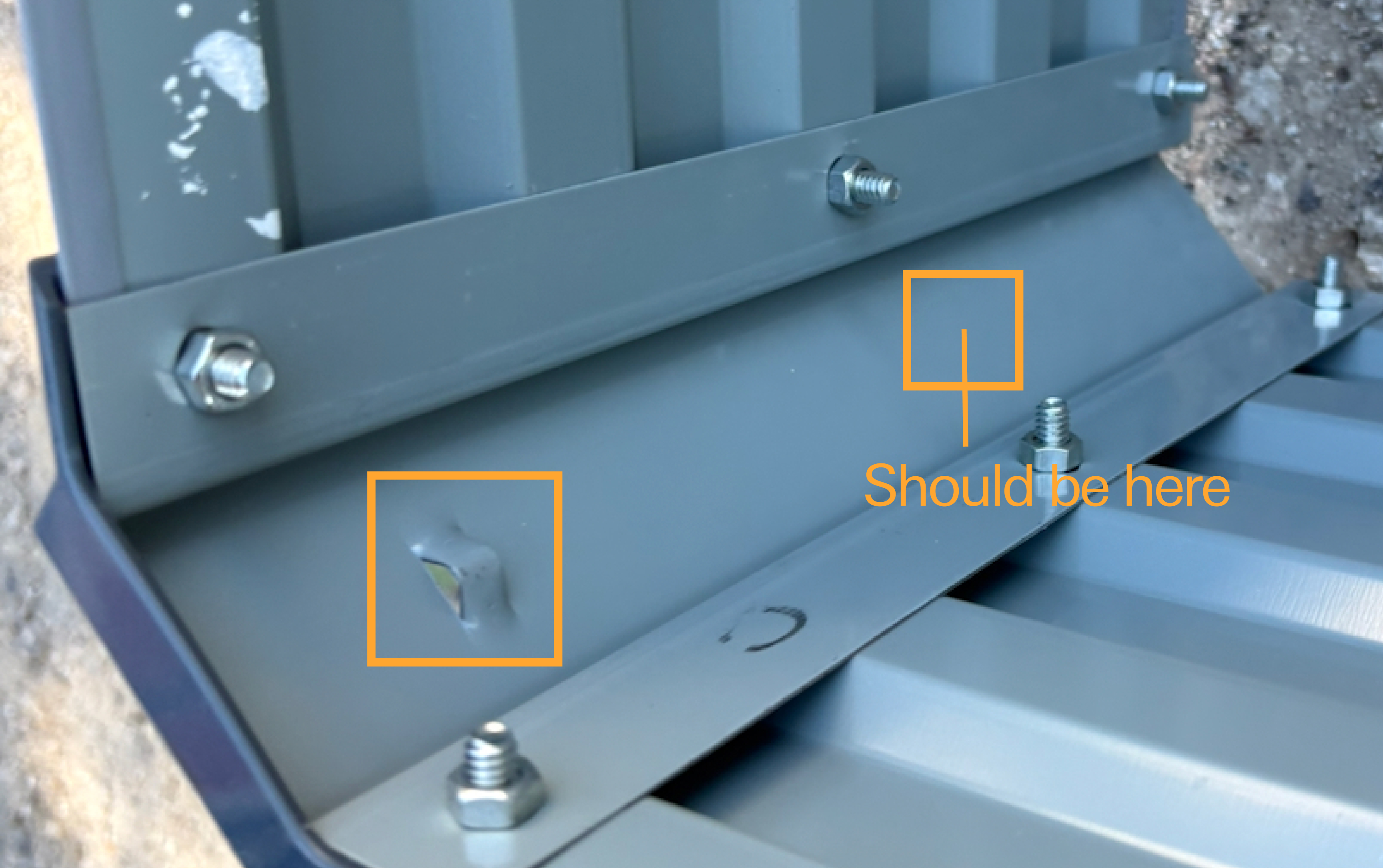
MANDATES Guidance, listening to verbalization (also called Reporting mode), and prompting micro-breaks. ———————— HYPOTHESES Guidance A) Step-by-step guidance prevents mistakes, and drives consistency. Guidance B) Time on-task and errors reduced with audio checking, as paper ends up out-of-sight. Reporting A) We think-aloud, if AMOS ‘rogers’ & encourages. Reporting B) Volunteers won’t make errors, verbalizing. Micro-breaks A) Users stop if they can’t help smiling. More effective for adherence than alarms. Micro-breaks B) 1-min breaks ~ every 10 minutes will restore energy for self-QA, and the time will be well spent, even if it LOOKS like less work is being done. ———————— PROCESS Observation: I visited multiple deskless worksites, including volunteering operations and paid student labor, and documented examples of ineffectiveness. Interviews: I interviewed volunteering coordinators Julia and Kay, Mateo, who led steel construction for a luxury tower in Monaco, and C., a worker at his university's arboretum — synthesizing and triangulating that getting contributors to follow SOPs in deskless labor is close to impossible. Precedent research: I read books on poka-yoke, the Japanese Lean practice of error reduction, and its adaptations in Lean Farming; studied training videos; and cross-referenced behavioral psychology — Kahneman, Fogg, self-determination theory — alongside a literature review on micro-breaks and agricultural dynamics: labor shortages, working conditions, and technological movements like digital twins. Matchmaking: From the research I built a matrix of candidate technologies across four quadrants — mass-market, easy-peasy, deep tech, and luxury — with entries including NFC, AR glasses, watches, drones, smart shovels, and robots. I chose AI plus walkie-talkies as the most promising mass-market option. User flows and stories: I compiled user stories for three personas — the coordinator, the expert volunteer, and the novice volunteer — and built user flows. I then taught Claude these stories and flows, and together we composed the AI protocol to prepare for the eventualities the stories surfaced. Wizard-of-oz prototyping: Before the dialog was automated, I puppeteered AMOS through a typed-line console — WoZ to learn, before I used proper agentic to refine. Typing as AMOS in live sessions let me discover the dialog's requirements by being the machine before building it. Hardware build: I built a shopping list of various items to use my PreSonus interface and a store-bought family grade walkie talkie as microphone and speaker. This took days of testing and still I couldn't get it to work. Until I found the Wouxun FRS radio, connected via USB-C, which made this possible. My professor, Maxim Safioulline, warned me against walkies, as in his day to get walkie talkie audio STT, he had to create his own cables — turns out in 2026, it is not so hard. User testing: I was lucky enough to test for 40 minutes with a beginner gardener at the SMC organic learning garden, and with 2 horticulture majors at Cal Poly University, alongside my cohort members and members of my family and MYSELF — given that this was a real implementation prototype, I used AMOS while working in long-term shifts, the closest I came to testing the real implication of AMOS for a 6–8-hour day. I also tested with a non-native English speaker with no electronics background, isolated the accent variable mid-session, and audited jargon — which produced plain-language rewrites of every spoken line. Implementation: I worked with Claude to build deterministic python, and an AI personality — AMOS uses Gemini for the long tail of questions. We use local-first models, so no student volunteer's voice leaves the device, and thus we don't violate FERPA laws. Audio HCI and heuristic evaluations: I iterated to remove latency and apply usability heuristics, including visibility of system status: finally achieved by using the walkie talkie end of transmission beep as a heuristic for 'transmission over,' thus allowing AMOS to prepare its response. I also iterated on copy, shortening to ensure AMOS's messages don't cognitively overload users. Style guide: I developed a brand and tested multiple typefaces and colors, alongside props and materials for my exhibition. UI development: I composed UIs with Claude including the demo visitors could see, and the control center for myself and my presentation assistant. Micro-break ideation: I came up with various ideas for micro-breaks, including riddles and dad jokes. Audio evaluation: I hand-labeled raw walkie recordings into ground-truth transcripts and scored the speech pipeline against them; every session logged telemetry (latency, carrier-sense, volume) for forensic review; and scripted red-team suites — 46 guided-walkthrough scenarios — pressure-tested the state machine before strangers could strand it. Storytelling: I shot a POV demo film in the field using the real AMOS implementation prototype, and left the failures in, giving an accurate depiction of work with AMOS — not a vision video, but the real thing. Proxy-task design: I raided the closets and designed a transferable stand-in for garden SOPs for the grad show: wiring a servo motor — a multi-step procedure with visible success — then validated the analogue itself with testers. Exhibition design: I sketched and iterated until finally composing a full exhibition at grad show, with a live demo which yielded real results.
Solution
GUIDANCE 01) I learned that AMOS's guidance fills knowledge gaps, and helps those who are uncomfortable asking superiors constantly, and don't want to pull out their phones. REPORTING 01) The verbalization protocol fell more flat, as people do not like to verbalize in a non life-or-death scenario, and have a bias that they're invincible (until they're not). 02) People are used to querying AI — not reporting to it. The prompt was inadequate in convincing people that reporting was worth their time, and I will have to work on better information scent. 03) I hypothesize people are more likely to use this feature, if every voice log is a data entry and an investment in their future, through which they can reflect on their work, see progress, and thus feel successful. MICRO-BREAKS 01) Micro-breaks genuinely produced moments of rest and fun between volunteers, including stopping me in my tracks while weeding, as it said: 'notice a bug moving on a leaf nearby. Watch its journey for a moment.' 02) Exhibition visitors contributed to the pool of micro-break prompts, showing individuals' desire to participate in prompting breaks, rather than having AMOS generate on their behalf.
