close


Thanh Quach


My Projects
Project T: Recto Verso
An EEG-driven installation that renders brainwaves into real-time visuals

Project T: Recto Verso
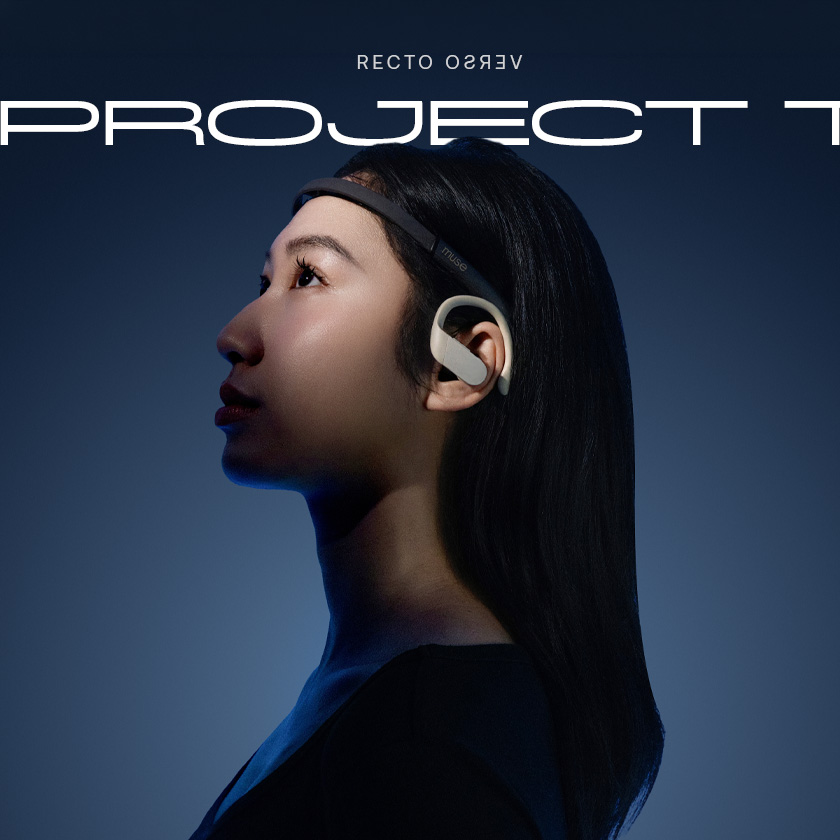
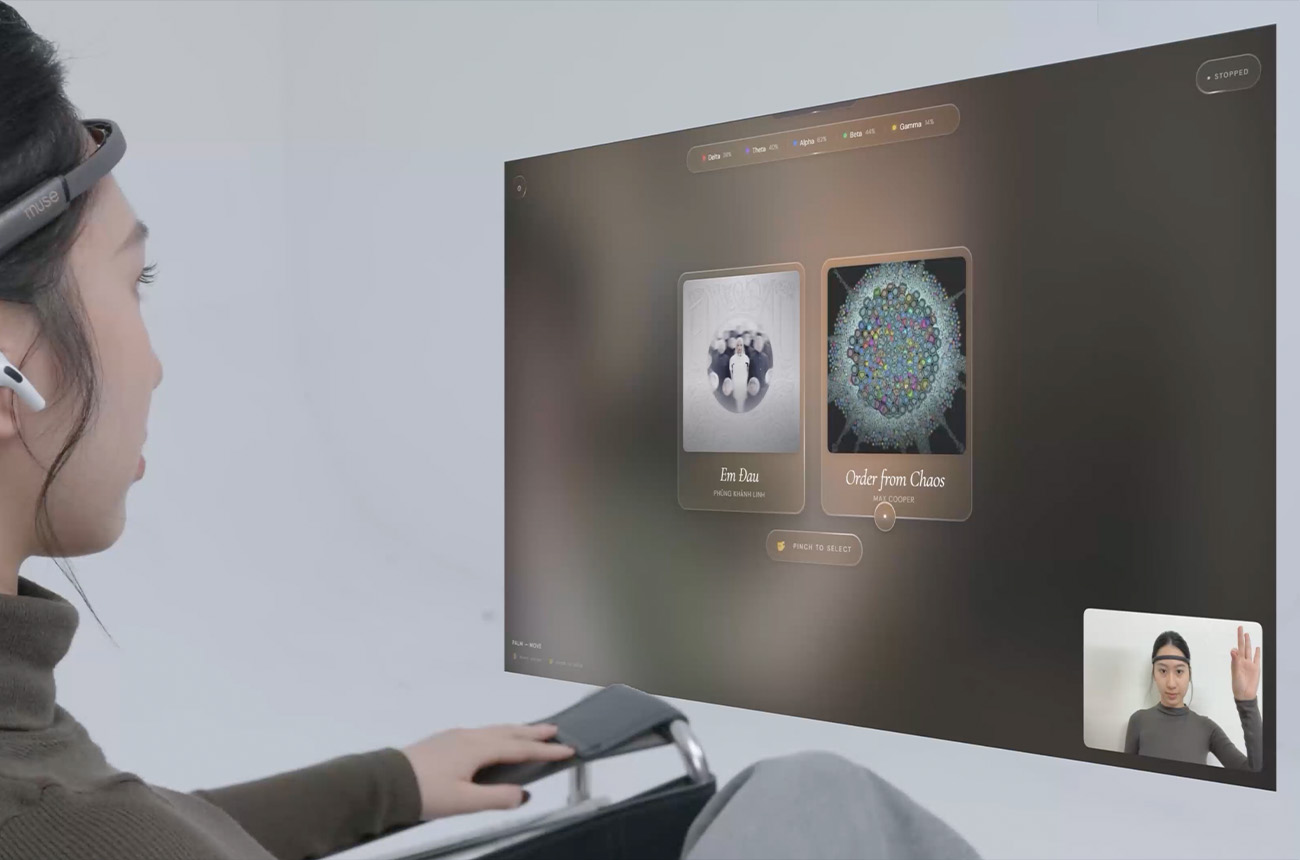
Recto Verso is an installation that tries to show what a person looks like on the inside. The wearer puts on a Muse 2 headset, and their brainwaves get read in real time. I built a pipeline in TouchDesigner that turns those signals into visuals as they happen. When the mind settles, the image holds together. When it tenses up, everything starts to break apart. There's a browser interface that you control with your hands, no screen to touch. Open your palm and you get a cursor. Pinch and you click. It moves through three songs, and one of them, Em Đau, plays in both Vietnamese and English, because I wanted the piece to carry where I come from. The name is a bookbinding term. Recto is the page you see. Verso is the one hidden behind it. The work sits in that gap, between the version of yourself you show people and the one you keep. I designed and built the sensing, the visuals, the gesture interface, and the sound. The Muse 2 is just the thing that reads the brain.
Problem
This started as something personal before it was ever a technical thing. Somewhere in the middle of school and client work, I lost track of myself. I wanted to make something that could pull what's inside a person out into the open and give it a shape. That turned out to be hard. Brainwave data on its own means nothing to anyone. A bunch of numbers moving up and down doesn't make you feel anything. The real problem was getting that signal to actually land, to feel like something instead of just sitting there as data. The sensor fought me too. The Muse 2's delta band gets thrown off by every blink and jaw clench, so I had to work around that. I had to keep brainwaves, video, audio, and hand tracking all running at once without the whole thing falling over, and pull a pile of separate TouchDesigner files into one system. And it had to be simple enough that a stranger could walk up, put it on, and understand what they were looking at without me explaining anything.
Insights
The thing I kept coming back to is that the meaning lives in how you map it, not in the data itself. Brainwaves only start to feel like something once each band is tied to an image a person can read on instinct. The process moved through a few stages. I started with secondary research into how the EEG bands behave, Delta through Gamma, and which ones actually reflect calm or stress. Then came the signal work, building the OSC chain in TouchDesigner with Select, Math, Filter, Lag, and Null to smooth the jittery readings into something usable. Testing with real people wearing the headset showed me three patterns that kept coming back, and those became the backbone of the visual states. From there I designed the visuals themselves, working through a honeycomb particle system, a feedback loop, and a biological zoom driven by beta activity. The interface went through its own rounds, starting as a carousel and ending as a two card grid with a focus interaction, paired with hand tracking I had to calibrate so the pinch wouldn't flicker. Every round taught me the same thing. Holding back said more than piling things on.


Solution
" The finished piece is one connected system. The Muse 2 streams EEG into TouchDesigner over OSC, which makes the visuals and sends the brainwave values to the browser over WebSocket. The video itself runs out through OBS Virtual Camera at 1080 by 1920 at 60fps using Spout, and the browser reads it straight in. That path saved me from the lag and instability I ran into trying to poll frames. The browser handles all the interaction, and you control it with your hands through MediaPipe. Open palm to move, pinch to choose. You move through three songs, each with its own world, while a live bar shows the five brainwave bands across the bottom. The sound comes out as 5.1 spatial audio routed from TouchDesigner to a Sony bar and rear speakers, so it wraps around you. What you end up with is a piece where you can sit there and watch your own state shape the image in front of you. A quiet mirror of the recto and the verso, the part you show and the part you don't."
