close


Yooji Chae


My Projects

Mimi The AI virtual assistant enrich Seniors Life
Helping seniors plan their days via equitable raffles and a digital connection to the senior center.

Mimi The AI virtual assistant enrich Seniors Life
An AI virtual assistant designed to enhance the lives of seniors by streamlining the raffle system and minimizing time wasted waiting in lines at the Korean senior community center.

Problem
Koreatown seniors face significant challenges, including poverty, social isolation, and limited access to green spaces. The Koreatown Senior and Community Center provides a vital lifeline through free classes and lunches, but its first-come-first-serve registration system causes inefficiencies. Seniors often arrive hours early to secure spots in classes or to pick up meals, leading to excessive waiting times.
Insights
The inefficiencies in the Koreatown Senior and Community Center’s registration and lunch distribution processes stem from limited accessibility and a lack of streamlined communication. The first-come-first-serve system requires seniors to invest significant time and physical effort, compounding the challenges they already face due to poverty, social isolation, and limited mobility. Additionally, many seniors avoid using online services due to a lack of familiarity with technology, further hindering their ability to access the center’s valuable offerings efficiently.


Solution
The solution would be in leveraging the capabilities of an AI assistant to streamline and simplify the registration process for classes and free lunch services. By minimizing the complexities and frustrations associated with navigating the website, the AI assistant can ensure a more user-friendly experience, enabling seniors to access these essential services with ease.
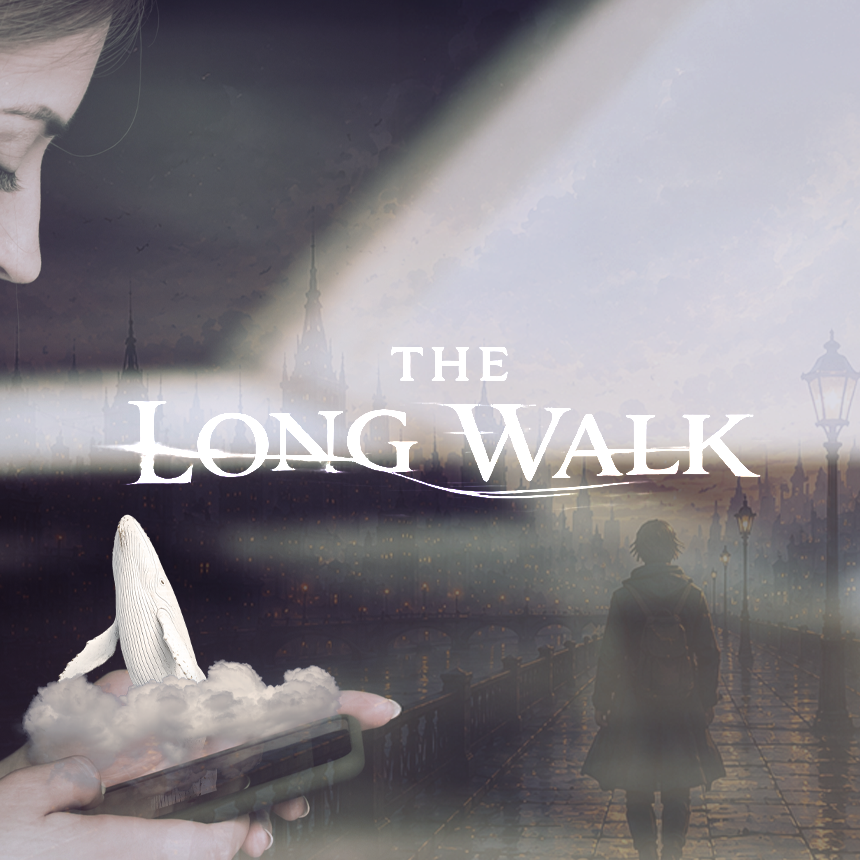
A Shape in the Distance
An interactive story that helps young people notice and sit with a feeling they can't yet name.
A Shape in the Distance
"The Long Walk is an interactive storytelling experience that helps young people notice emotions they can't yet name. Adolescents often feel something intensely but lack of awareness, and a feeling that goes unnoticed tends to get carried silently. Rather than explaining emotions, The Long Walk lets young people experience one. Players follow a white whale through a quiet, atmospheric city, a whale only they can see. As they walk, small choices shape how the journey feels, not where it ends. At the close, they find the whale resting in a small room and realize it was a feeling they'd been carrying all along. Grounded in James Gross's model of emotional regulation, the project focuses on the very first step"" noticing "" before naming or managing a feeling. It isn't therapy or a fix. It's a gentle first step into emotional awareness."

Problem
"Many young people experience emotions they can't identify. The feeling is there, intense and real, but without the words to name it, it becomes difficult to understand, express, or work through. This matters most in adolescence, when emotional intensity is already high but the ability to recognize and label feelings is still developing. A feeling that goes unnoticed often gets pushed down and carried silently. Most existing tools skip past this. They ask users to journal, reframe, or manage emotions, which assumes you already know what you're feeling. I wanted to focus on the step before that: simply noticing. The biggest challenge was designing for emotion without explaining it. How do you help someone recognize a feeling without naming it for them? I had to communicate emotion through atmosphere, pacing, and metaphor rather than text, and make the experience feel emotionally safe, so exploring a difficult feeling never became overwhelming."
Insights
"Secondary research gave the project its backbone. James Gross's model of emotional regulation showed that regulation begins with noticing a feeling before reframing or managing it, which defined my scope. Research by Dorothy and Jerome Singer added the other half: that children process emotions through imaginative play and experience, not just language. Together, these pointed clearly toward a story you move through rather than a lesson you're taught. Personas kept it human. ""Max,"" a quiet twelve year old who feels deeply but struggles to express it, anchored every decision in a real need. Narrative design and storyboarding shaped the experience: a branching structure of eight scenes, multiple paths, and three endings, built around a single guiding metaphor. Prototyping tested how the pieces worked together how text, image, and choice combined on screen to carry feeling without words. User testing taught me the most: that restraint worked. People didn't need the feeling explained, they responded to being given space to sense it themselves."


Solution
"The final product, The Long Walk, is a web-based interactive story. Players follow a white whale through a quiet, atmospheric city, a whale only they can see. Text unfolds as they move, and choices appear directly on the image, keeping the experience immersive. Those choices don't change where the story ends; they change how the journey feels. The design centers on a single turning point: discovering the whale resting in a small room, and realizing it was a feeling carried all along. Supporting sections, a dialogue log, a personal journey view, and a gallery, extend the experience beyond the main story. In early testing, the signal was clear and consistent: the experience felt emotionally safe, the central metaphor communicated an unnamed feeling without explanation, and the moment that resonated most was the one the whole design was built toward."
