close


Alexander Albao


My Projects
_thumbnail_image%20-%20ALEXANDER%20ALBAO.png)
Nori
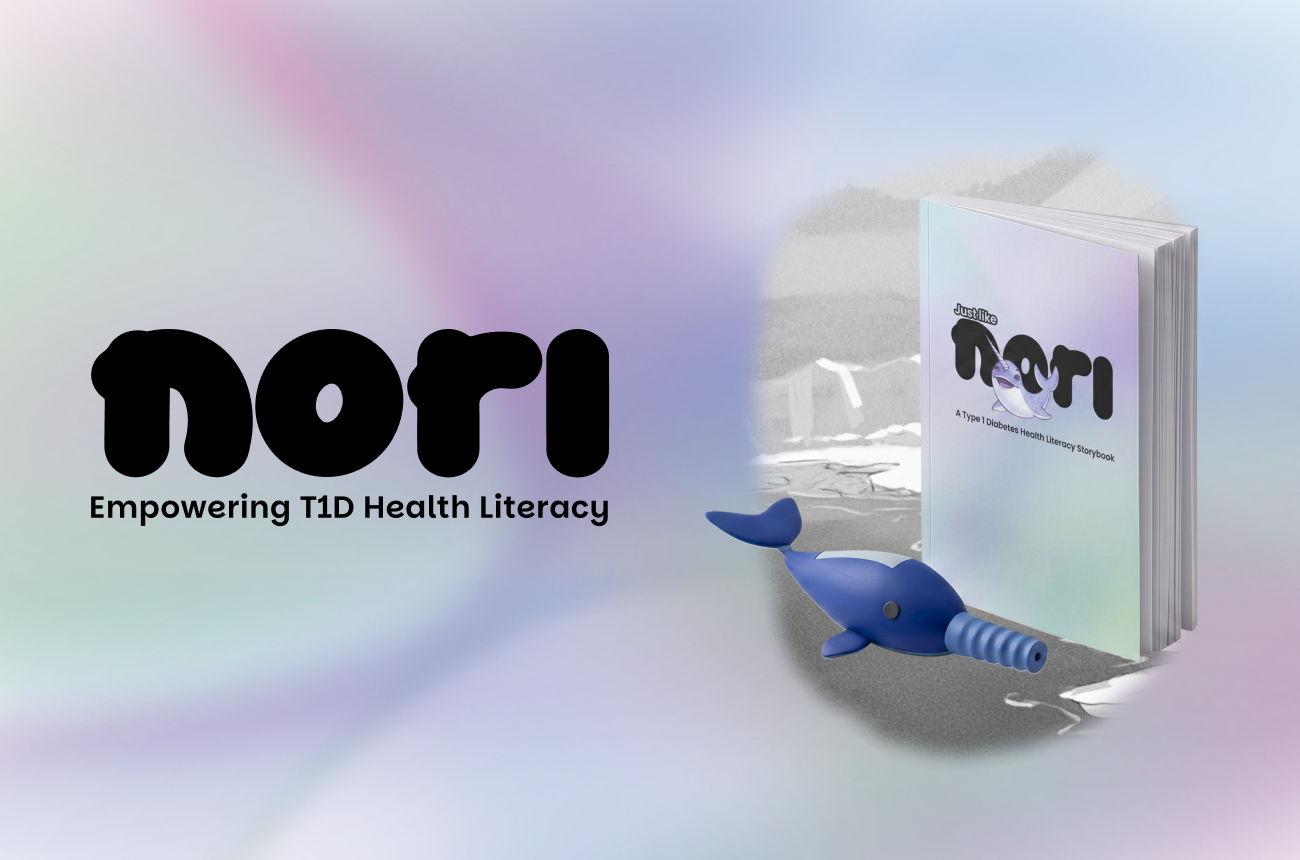
Nori is a system using a characterized lancet device and a storybook titled Just like Nori

Nori
"Nori uses a characterized lancet device and storybook to empower Type 1 Diabetes (T1D) health literacy. One in four parents of children with chronic disease struggle with low health literacy, this creates dangerous gaps that put their well-being at risk. T1D is an autoimmune disease where the pancreas produces insufficient insulin, causing life-threatening blood sugar buildups. Managing the condition requires glucose checks at least four times a day. Traditionally, these checks use a lancet device housing a needle to puncture the skin. The sterile medical design and new routine can cause traumatic experiences for children. Nori introduces a storybook titled Just Like Nori, featuring a friendly narwhal character whose journey mirrors the experiences of living with T1D. The accompanying Nori lancet device offers a friendlier approach to daily glucose checks. By pairing a reading routine with a playful character designed medical device, the Nori system fosters shared moments and improves health literacy for both caregivers and children."
Problem
The journey for caregivers and children to independently manage Type 1 Diabetes (T1D) begins immediately upon hospital discharge. At home, families must navigate nutrition, food logging, medical devices, blood sugar monitoring, insulin dosages, social interactions, exercise, finances and more. This care requires a profound lifestyle transformation. For instance, blood sugar checks occur at least four times a day. Each check requires using a lancet device to prick the child's fingertip for a blood sample—a process that eventually becomes a daily ritual akin to brushing teeth. To ease this transition, tools like books, support groups, and toys help build health literacy: the ability to find, understand, and use medical information. However, a significant gap remains because the sterile design of current medical devices fails to make disease management relatable for young children.
Insights
"I had the opportunity to interview Dr. Nozomi Yamashita, an attending physician at the Center for Endocrinology, Diabetes and Metabolism at Children’s Hospital Los Angeles. ""Our newly diagnosed patients and families go through pretty extensive education upfront,"" she said. Dr. Yamashita explained that upon a T1D diagnosis, families meet with several specialized teams: Diet and Nutrition for carbohydrate counting, Social Work to navigate social and financial expectations, and the Nursing Team for an introduction to medical devices, including their use and maintenance. This education is critical, as a paper from the American Academy of Pediatrics notes that ""1 in 4 parents of children with chronic diseases have low health literacy."" Low health literacy can subsequently lead to more frequent emergency room visits and clinical follow-ups. To address this gap, I designed a solution inspired by the narwhal. I chose this animal because its tusk serves as a sensory organ to understand the surrounding environment, measuring water salinity, temperature, and even facilitating communication. This tusk serves as the perfect, friendly symbol for a needle, which is used frequently in managing T1D. After gathering images of narwhals, I traced the first iteration of Nori the Narwhal. I then collaborated with an industrial designer on further iterations to develop the functionality for a characterized lancet device. Simultaneously, I wrote the first draft of the Just Like Nori storybook. As the text evolved, I storyboarded and sketched the book's illustrations before hiring a professional illustrator to develop the digital images that bring us into Nori’s world. "


Solution
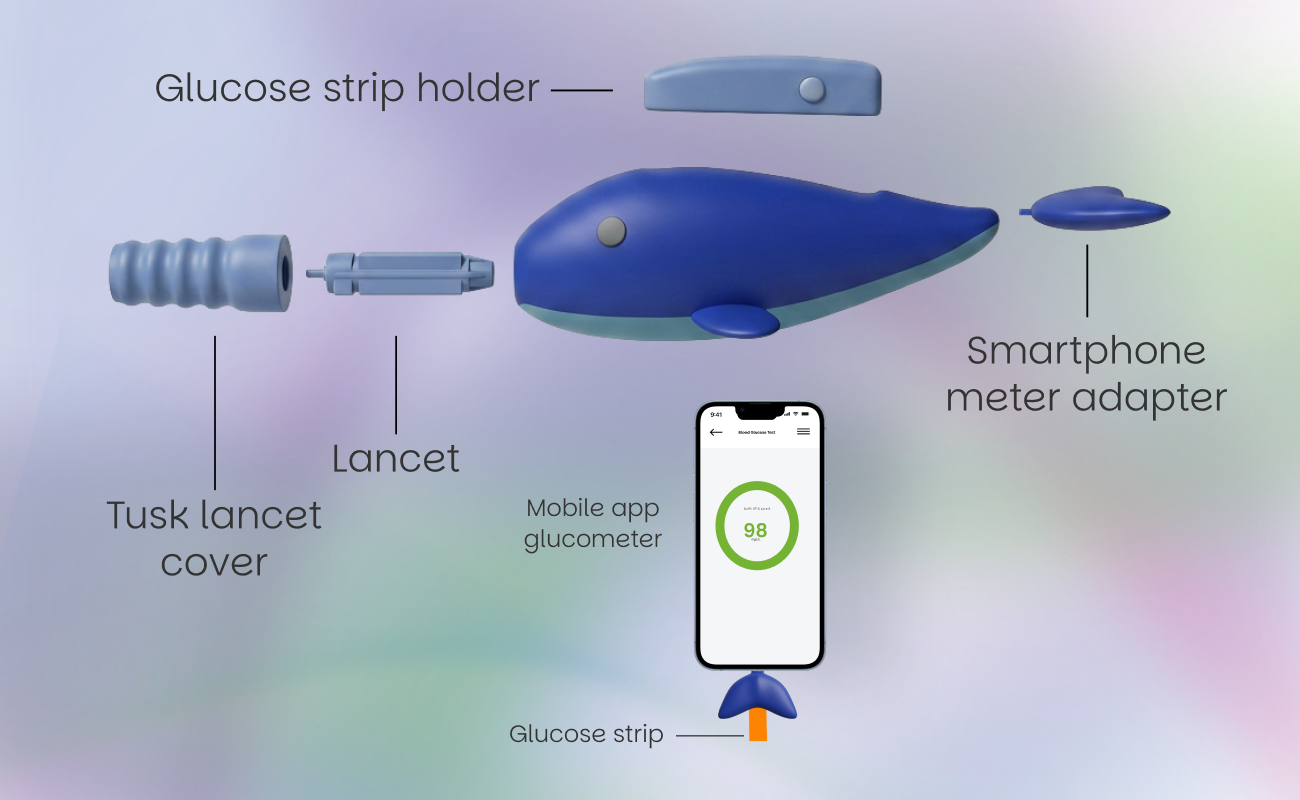
"Nori is a system designed to empower T1D health literacy in young children. The system features a storybook titled Just Like Nori, which follows Nori the Narwhal as she navigates common T1D symptoms like night sweats, nightmares, a fast heartbeat, and intense hunger. Throughout the story, Nori learns to communicate her feelings to Mama and her friend Ruby. By trusting her tusk to provide vital information about her environment, Nori learns how to make decisions to manage what she is experiencing. The storybook is paired with a child-friendly lancet device modeled after Nori. Its tactile design transforms blood glucose testing into a comforting daily ritual. The standout feature is Nori's tusk, which detaches from the device's main body to serve as a safety cap over the lancet needle. This unique mechanism reframes a sterile medical procedure into an approachable, less intimidating experience. Ultimately, Nori builds health literacy by bringing a gentler, friendlier approach to pediatric T1D management."
