close


Lionell Burgess


My Projects

Fro-mi
A Salon In Your Hands

Fro-mi
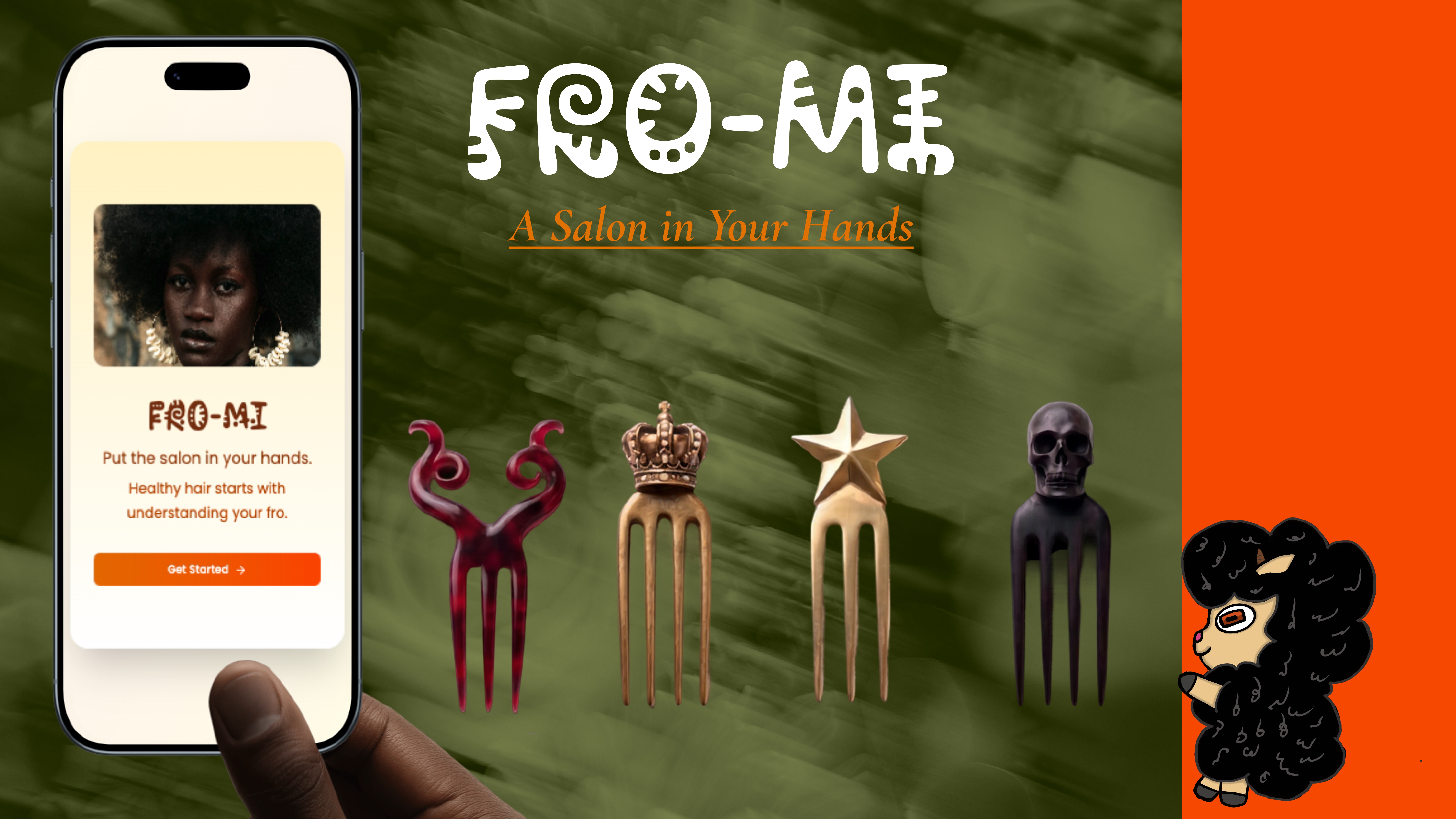
"Hair is a staple within the Black community. Textured hair has been forced to conform and assimilate since the era of Jim Crow, teaching Black people to view their hair as a burden or something undesirable and unworthy. Yet there has always been a space where textured hair is celebrated. It has been honored through activism, film, magazines, and beyond. Fro-mi continues to shine a light on textured hair, guiding people on how to grow, love, and nurture their crown with the reimagining of how the pic could be used. It is a safe space, free from judgment, where planters (users) can find and store knowledge throughout their hair journey. Fro-mi was born out of the experience of being condemned and shunned. It makes space for those who need extra love in their healing and reconnection to their hair, while upholding the deep history and undeniable power that textured hair has always carried. "
Problem
"Fro-mi was born out of a problem that millions of people with textured hair face every day — caring for their hair without any reliable guidance. Despite the afro pick being a tool with thousands of years of history and deep cultural significance, it has never evolved beyond its original form. People with natural hair are largely left to figure out their routines through trial and error, often discovering damage only after it has already occurred. There is no feedback, no data, and no system built around the specific needs of afro-textured hair. The core challenge this project set out to solve was the gap between cultural identity and functional hair health. Through four user interviews, it became clear that the problem was not a lack of care or effort — it was a lack of information. Participants did not know their hair's hydration levels, could not detect when detangling was causing breakage, and had never received formal education on how to care for their own hair. The existing apps on the market offered partial solutions at best, but none of them were built with the textured hair community at the center, and none connected a physical tool to an intelligent system. The challenge of this project was both technical and human. On the technical side, the work involved researching and designing a sensor system that could fit inside the body of a pick, transmit data wirelessly, and power an AI model capable of learning individual hair patterns over time. On the human side, the challenge was designing an experience that felt safe, culturally informed, and genuinely useful — not another generic wellness app that treats Black hair as an afterthought. Every decision, from the onboarding flow to the habit tracking page to the how-to section, was made with the intention of building something the community could trust."
Insights
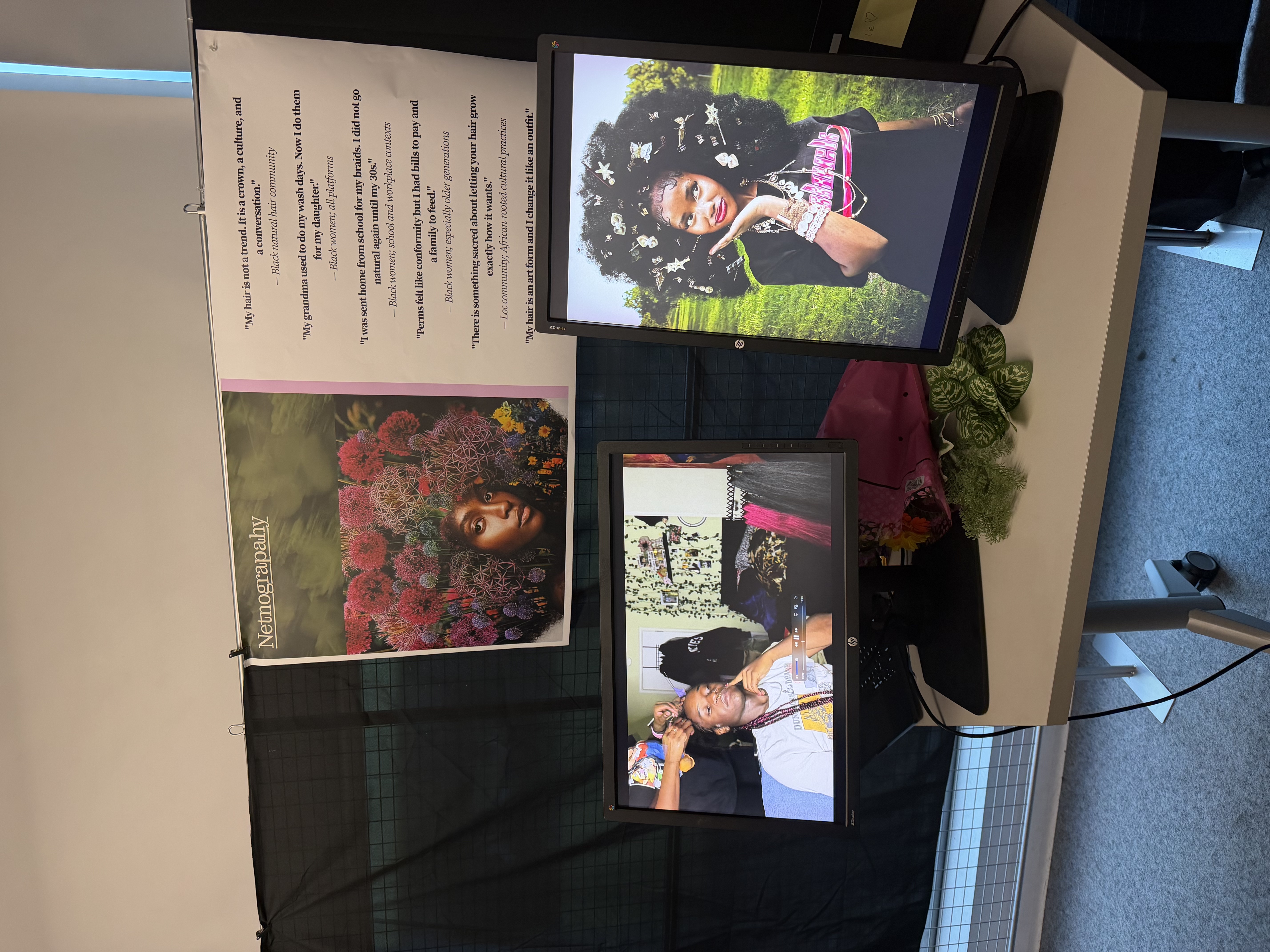
"Throughout the development of fro-mi, the research and design process uncovered insights that fundamentally shaped the direction of the product. What began as a concept rooted in technology quickly became a deeply human-centered project — one that revealed just how personal, emotional, and underserved the natural hair care experience truly is. **Secondary Research** laid the groundwork by establishing the cultural and historical significance of the afro pick, tracing its roots back over 5,000 years to ancient Africa and through its rebirth during the Black Power movement of the 1960s and 70s. This research made it clear that any product touching this tool had to honor its legacy, not just reimagine its function. It also surfaced the scale of the market opportunity — a $5B+ natural hair care industry with no personalized hardware solution in existence. **User Interviews** were where the most critical insights emerged. Across four conversations, a consistent pattern appeared: people with textured hair were not failing at their routines because they lacked effort — they lacked information. No one had taught them how to read their own hair. They did not know what hydration felt like versus dryness, could not tell when detangling was causing invisible damage, and had no system for tracking whether their routine was actually working. These interviews became the emotional and functional blueprint for every feature built into fro-mi. **Personas and User Journey Mapping** helped translate those raw insights into design direction. By mapping the emotional highs and lows of a planter's hair care journey — from wash day frustration to the quiet confidence of a routine that works — it became clear where the product needed to intervene and where it needed to simply get out of the way. The journey map revealed that the biggest pain point was not the styling process itself, but the uncertainty that surrounded it. **Wireframes and Low-to-Mid Fidelity Prototypes** allowed the app's structure to be tested and refined before committing to a visual direction. Early wireframes focused on the core flow — onboarding, habit tracking, the journal, the how-to page, and the styling page — and helped identify where users might feel overwhelmed or lost. Iterations focused heavily on simplifying the onboarding experience, ensuring that asking about hair texture, density, and scalp sensitivity felt like a conversation rather than a form. **The Style Guide and Visual Identity** were developed to ensure that fro-mi felt as intentional visually as it did functionally. The color palette — deep plum, berry, rose, and blush — was chosen to feel warm, premium, and rooted in the community it serves. Typography and layout decisions were made to balance the boldness of the brand with the approachability the experience required. The result was a design system that could carry both the cultural weight of the product's origins and the clarity needed for everyday use. Together, these phases of the process reinforced a single key insight: the textured hair community does not need another generic wellness tool. They need a system that was built with them in mind from the very first decision — and that is exactly what fro-mi was designed to be."
Solution
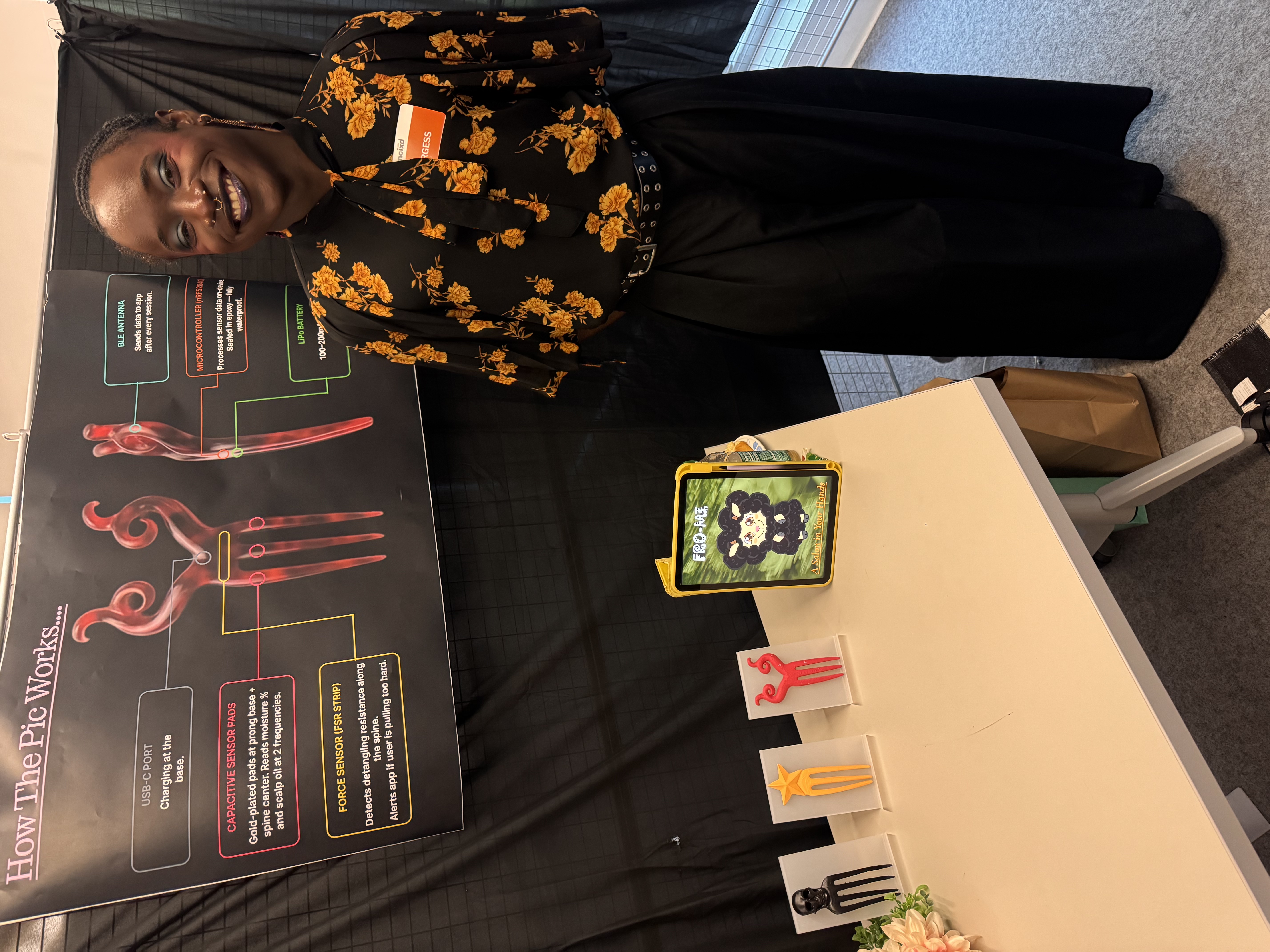
"The solution fro-mi arrived at was not just an app, and not just a tool — it was a complete hair care system designed to work as one connected experience. At the center of that system is a reimagined afro pick embedded with two types of sensors: capacitive sensor pads along the prongs and spine that measure hair hydration and scalp oil levels, and a force-sensitive resistor in the spine that detects detangling resistance in real time. Every time a planter uses the pick, it passively collects data and transmits it via Bluetooth to the fro-mi app — no manual input, no extra steps. The app opens with a carefully designed onboarding experience built to make planters feel safe and informed from the start. It begins with a brief infographic about the history and significance of the afro, before walking planters through questions about their hair texture, length, density, and scalp sensitivity. From there, planters set their hair goals and share details about their current routine. This information is used to generate a fully personalized care plan — including a recommended routine and product guidance tailored specifically to that individual's hair profile. Once onboarded, planters land on the home page, which functions as a habit tracking dashboard showing how consistently they have followed their care plan through their pick usage over time. The journal and log pages allow planters to photograph their hair at any point and build a visual record of their progress from day one to present — giving them something no existing app currently offers: evidence of whether their routine is actually working. The how-to page provides a judgment-free space for planters to learn how to care for their own hair, with tutorials and product recommendations highlighted based on their specific hair profile. And the styling page connects planters to nearby professional stylists, complete with rates and reviews, for moments when professional support is needed. Underlying all of it is an AI model that learns each individual user over time — identifying patterns, predicting care needs 24 to 48 hours in advance, and sending alerts when the force sensor detects resistance spikes that signal potential breakage before it happens. The intelligence lives entirely in the app, keeping the physical pick simple, elegant, and hardware-independent as the system continues to evolve. fro-mi's final solution proved that the most meaningful innovation in this space was not about adding more features — it was about building the right system, for the right community, with the right intention behind every decision."
