close


Uyen Tran


My Projects

The WayPass
Improving accessibility by designing a more equitable street-crossing experience.

The WayPass
Smart street-crossing system aiming to improve accessibility by adding extra crossing time based on users' needs.

Problem
In Los Angeles, approximately 12% to 13% of the population has some form of disability, which includes mobility challenges. The city faces significant challenges in creating accessible transportation and infrastructure for people with mobility impairments. Despite efforts to enhance urban design, many crosswalks fail to accommodate the diverse needs of people with limited mobility.
Insights
Pedestrian crossing times in Los Angeles are based on a walking speed of 3.5 ft per second (25 seconds to cross an 85 ft wide street), which excludes the needs of individuals with mobility challenges, who may move as slowly as 1.5 ft per second, taking almost 1 minute to cross streets with the same width. Through our interviews with two participants living with disability, we learned that these barriers for accessibility leave them even more vulnerable, unable to cross streets safely within the provided time. Their needs being disregarded leads to frustration and other mental health problems.


Solution
The WayPass - a smart crossing system for crosswalks, with equitable design accommodating the needs of people with limited mobility. WayPass lets people with mobility challenges have extended amount of crossing time based on their needs, by standing near the system sensor, tapping their phone or wearable on the screen attached to the traffic pole, or entering their unique PIN number.

In-Between
An exhibition and a visual archive of the objects that carry memories and cultural identities
In-Between
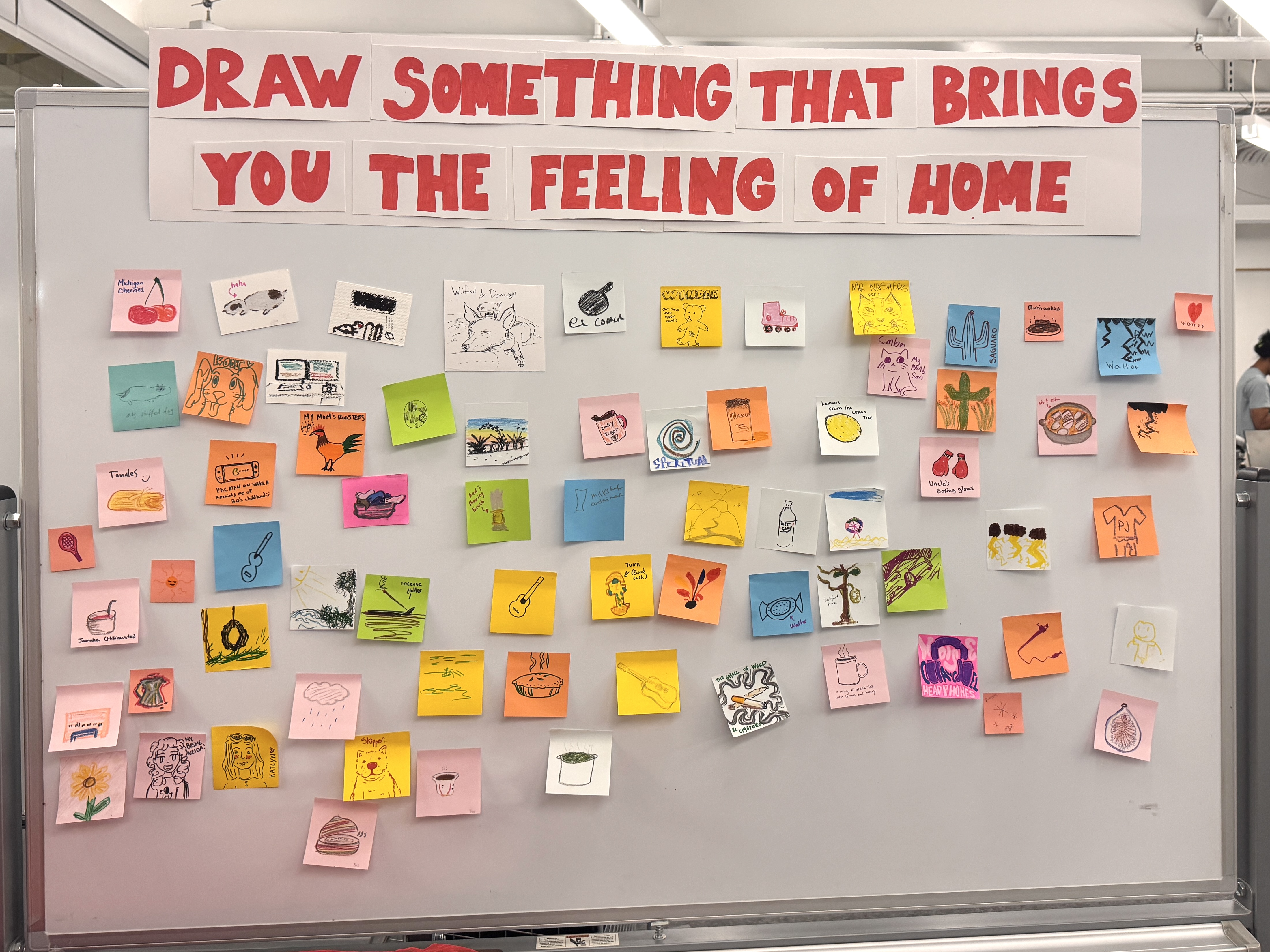
"I packed up my life to move across the world from Vietnam to the US when I was 24. In the 6 years living abroad, I grappled with the concept of “home” and where I belong. With a collection of very random things I brought from Vietnam, like my mom’s medicated oil and the beat-up stuffed dog I had since I was a kid, I built a little ‘home’ for myself in this unfamiliar world. In-Between: A Museum of Temporary Belonging aims to shed light on this emotional space. It is an exhibition and a visual archive of the objects that carry memories and cultural identities, documenting how people build a sense of belonging when they live in between cultures and 'home' is somewhere else. These objects are too important to be left unseen. Here, they are treated as what they always were: priceless, and therefore, the experiences and stories they carry are declared worth knowing."

Problem
"I packed up my life to move across the world from Vietnam to the US when I was 24. In the 6 years living abroad, I grappled with the concept of “home” and where I belong. With a collection of very random things I brought from Vietnam, like my mom’s medicated oil and the beat-up stuffed dog I had since I was a kid, I built a little ‘home’ for myself in this unfamiliar world. After talking to everyone I know who are living abroad, and doing some desktop research, I know that I'm not alone in feeling this way."
Insights
" 281 million people live outside their country of birth. 45% of international students report feeling lonely. 4x more likely to have better mental health if there is strong community belonging."


Solution
"This is the reason why I made In-Between: A Museum of Temporary Belonging. I strongly believe that seeing yourself reflected in someone else's object creates emotional validation. that recognition builds understanding, empathy and genuine connection between people, and in doing so, strengthens community in a world that is increasingly global but increasingly lonely."
